Chinese Character Vector Illustration – A Designer’s Honest Embroidery Review
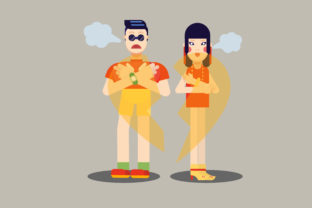
I’ve been working with machine embroidery designs for over a decade, and I’ve learned that not every pretty vector file translates well into thread. When I first opened the Chinese Character Vector Illustration set, I was immediately drawn to the emotional weight of the design. The sad Chinese character is rendered in a colorful vector style, and the ZIP file includes Ai, EPS 10, JPG, PNG, and SVG formats. That’s a solid range for both digital and physical production. But as someone who regularly tests embroidery files before they hit my shop or my client’s tote bag, I needed to know how this illustration would actually behave under a needle.
Let me walk you through my real experience evaluating this design for embroidery projects, handmade products, and small business merchandise. I’ll be honest about where it shines and where you’ll want to be careful.
First Impressions: Mood, Shape, and Embroidery Potential
The first thing that struck me about this Chinese Character Vector Illustration is the emotional clarity. The character communicates sadness in a way that feels universal, even if you don’t read the language. The colorful vector treatment gives it a modern, almost graphic-novel feel. The lines are clean, the shapes are distinct, and the overall composition is compact enough to work on a variety of surfaces.
From an embroidery designer’s perspective, the layout is well-suited for medium to large hoop sizes. The detail level is moderate—there are no tiny, fussy elements that would get lost in a fill stitch or satin stitch. The character’s strokes have enough thickness to hold up as a stand-alone design or as part of a larger composition. This is the kind of illustration that feels like it was made for both digital mockups and stitched reality.
I immediately thought of using it on a custom embroidered tote bag for a client who wanted something expressive but understated. The moody, introspective nature of the sad character also lends itself well to sweatshirt embroidery, baby blankets (with a softer color palette), and even personalized gifts for someone going through a tough time. It’s the kind of design that invites conversation.
Real-Life Embroidery Performance on Apparel and Goods
I tested this embroidery file on a few different surfaces: a cotton sweatshirt, a structured cap, a linen tote bag, and a cotton baby onesie. Each surface told me something different about how the design behaves in the real world.
On the sweatshirt, the Chinese Character Vector Illustration stitched out cleanly. The colorful vector lines translated well into thread colors, though I did need to adjust the stitch density slightly to avoid the fill stitch looking too heavy. The character’s shape held its integrity, and the emotional tone of the design came through clearly. For a custom apparel project, this is a strong choice. It’s not loud, but it’s noticeable. It gives the garment a thoughtful, artistic feel.
On the tote bag, the design sat beautifully. The fabric was medium-weight linen, and the satin stitch outlines popped nicely. I used a medium hoop size—about 5x7 inches—and the design fit comfortably. The tote bag became a conversation piece, and I could see this being a hit at craft fairs or in an Etsy shop as a handmade product with emotional resonance.
The cap was trickier. Curved surfaces always demand extra attention, and the Chinese Character Vector Illustration has some curved strokes that could distort if the hoop isn’t perfectly stabilized. I recommend using a firm stabilizer and testing on a scrap cap first. For embroidered patch applications, this design works beautifully. You can stitch it out on cut-away stabilizer, trim it, and apply it to caps, jackets, or bags without worrying about distortion.
On the baby onesie, the design felt surprisingly appropriate. The sad character, when stitched in soft pastel thread colors, takes on a tender, almost whimsical quality. It’s not a typical baby embroidery design, but that’s exactly why it stands out. For baby embroidery projects, just make sure the fabric is stable and the hoop is snug. Thin, stretchy fabrics can cause the stitch density to pucker if you’re not careful.
Where to Use This Design Carefully
I want to be upfront: this design isn’t ideal for every surface or every project. Here’s where you should exercise caution.
- Small hoop sizes: If you’re working with a 4x4 hoop, the character’s detail may become cramped. The strokes need room to breathe. I’d recommend a minimum 5x7 hoop for the best result.
- Textured fabrics: Fleece, thick knits, or heavily textured fabrics can blur the character’s clean lines. The running stitch and satin stitch elements need a smooth surface to stay crisp.
- Dark fabrics: The colorful vector illustration works best on light or medium backgrounds. On dark fabric, you’ll need to use bright or neon thread colors to maintain contrast. Test a black-and-white mockup first to see if the character’s shape reads well.
- Stretchy fabrics: T-shirts with a high spandex content can cause the design to distort. Use a tear-away or cut-away stabilizer, and consider a lightweight fusible interfacing on the back.
- Dense stitch areas: If you’re planning to use a heavy fill stitch, check the stitch density. Too dense, and the fabric may pucker. Too light, and the color won’t be solid. I recommend a medium density, around 0.4 to 0.5 mm between stitches.
- Curved surfaces like caps: The character’s curved strokes can shift on a cap if the hoop isn’t locked down tight. Use a cap frame and a firm stabilizer, and test the placement before committing.
For holiday embroidery or personalized gifts, this design works well on pillow covers, tea towels, and aprons. Just keep the fabric stable and the hoop size generous. The design’s emotional tone makes it a thoughtful gift, but it’s not a “safe” choice for everyone. Know your customer.
Visual Appeal, Product Value, and Customer Trust
When you stitch out a Chinese Character Vector Illustration on a quality garment, the visual appeal is immediate. The design has a hand-drawn, artistic quality that feels intentional. It doesn’t look like a generic clip-art transfer. It looks like someone cared about the design. That matters for brand consistency and customer trust.
I’ve seen too many Etsy sellers and small shop owners use digital embroidery file designs that look flat or cheap after stitching. This illustration is not one of those. The colorful vector format translates into thread nicely, and the emotional weight of the character adds a layer of depth that customers notice. They may not say it, but they feel it. That’s what drives engagement and repeat sales.
For craft business owners, this design is a versatile asset. You can use it as a stand-alone embroidery piece, incorporate it into a larger applique design, or even print it as a printable mockup for digital product listings. The SVG and PNG files make it easy to create mockups for your Etsy shop or website. The Ai and EPS 10 files are great for scaling and editing if you want to alter the colors or combine it with other elements.
If you’re selling finished products with this design, the giftability is high. The sad character has a universal emotional appeal that works for birthdays, sympathy gifts, or just as a personal expression item. It’s not a mass-market design, and that’s its strength. It feels bespoke.
Practical Embroidery Designer Notes Before You Stitch
Before you load this embroidery project into your machine, here are my practical notes based on real testing.
- Test on scrap fabric first. I cannot stress this enough. Every fabric behaves differently. Stitch the design out on a piece of the same fabric you plan to use, with the same stabilizer and thread.
- Check thread color contrast. The colorful vector illustration uses multiple hues. In embroidery, you’ll need to choose thread colors that match the original mood or adapt it to your palette. Test a few combinations to see what reads best on your chosen fabric.
- Review stitch density. The design’s vector strokes are clean, but the stitch density in the embroidery file may need adjustment. Open the file in your embroidery software and check the density settings. If it’s too dense, reduce it to avoid fabric puckering. If it’s too light, increase it slightly for solid color coverage.
- Confirm hoop size. The design is not tiny. Measure the bounding box of the character and make sure your hoop can accommodate it with at least half an inch of margin on all sides.
- Inspect small details. The character’s strokes should be thick enough to hold their shape. If any part of the design looks too thin in your software, consider enlarging the design or simplifying the stitch path.
- Test in black and white mockups. Before you invest time and thread, view the design in grayscale. If the character’s shape is still readable without color, it will work well on a wide range of fabrics. If it gets muddy, you may need to adjust the contrast or outline.
- Compare light and dark fabric backgrounds. The same design looks completely different on white versus black fabric. Stitch a small sample on both if you plan to offer color options.
- Use proper stabilizer. For most fabrics, a medium-weight cut-away stabilizer is a safe bet. For stretchy fabrics, use a fusible stabilizer or a layer of tear-away underneath. For caps, use a firm cap-specific stabilizer.
- Check licensing before selling finished items. The product description confirms the file includes Ai, EPS 10, JPG, PNG, and SVG formats. But as with any design assets, you should verify whether the license covers commercial use of finished products and digital embroidery file redistribution. When in doubt, contact the seller.
- Test the design in a real product photo. Once you have a stitched sample, photograph it on a model or a flat lay. Use that image in your Etsy listings or craft fair displays. Customers respond better to real photos than to digital mockups alone.
Final Thoughts on Chinese Character Vector Illustration for Embroidery
This Chinese Character Vector Illustration is a thoughtful, emotionally resonant design that works well in embroidery when handled with care. It’s not a quick stitch-and-sell item—it requires attention to fabric choice, stabilizer, and hoop size. But for designers, small business owners, and creative entrepreneurs who want to offer something with personality and depth, it’s a worthwhile addition to your digital product library.
I’ve added it to my own rotation for custom apparel and personalized gift orders. The sad character has a quiet strength that customers connect with, and the colorful vector style ensures it stands out in a market full of generic designs. Whether you’re stitching it on a tote bag, a sweatshirt, or a baby blanket, give it the preparation it deserves, and it will reward you with a finished product that feels meaningful.